
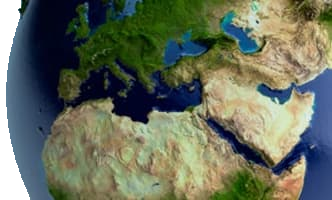
The 18th Ordinary Meeting of the Contracting Parties (COP 18) to the Barcelona Convention for the Protection of the Marine Environment and the Coastal Region of the Mediterranean and its Protocols was held from 3 to 6 December 2013 in Istanbul, Turkey. Delegates from 21 Mediterranean countries, the European Union and representatives from non-governmental organizations and international organizations attended the Meeting.
The Meeting covered a wide range of issues which led to the adoption of 17 Decisions. More specifically, Parties agreed on the development of an Action Plan to address Mediterranean Sustainable Consumption and Production (SCP) priorities, including reducing human impacts on coastal and marine ecosystems. Action Plans were also adopted under the Specially Protected Areas and Biodiversity Protocol, 1995, for the protection and conservation of Monk Seals, Marine Turtles, Birds and Cartilaginous Fishes. COP 18 further decided on targets and definitions of ‘Good Environmental Status’ for 11 ecological objectives and the increase of number and visibility of the Specially Protected Areas of Mediterranean Importance (SPAMI).
Of particular importance was the Decision related with the adoption of The Marine Litter Regional Action Plan because this plan is the first regional effort to follow up on the Rio+20 summit global commitment to reduce marine debris by 2025. It aims to ensure environmentally sound solid waste management, reduce waste volumes, recycle and promote sustainable patterns of consumption and production. The Meeting also focused on necessary measures to prevent pollution from Offshore and Shipping based activities in the Mediterranean including by requesting the revision of relevant Action Plans as part of the 2014-15 programme of work.
The Meeting included a ministerial segment, attended by more than half of the Mediterranean ministers and deputy ministers. For the first time, Mediterranean countries and the European Union discussed and agreed to promote Environment Friendly Cities that apply integrated coastal zone management principles to urban planning, introduce green technologies to reduce environmental pollution and adhere to the ecosystem based management of human activities.
The COP 18 adopted the Istanbul Declaration, which calls for the development of a comprehensive, coherent network of well-managed coastal and marine protected areas in the Mediterranean by 2020 and thus extend to 10% the Mediterranean network of marine and coastal protected areas including deep seas whether within or beyond national jurisdiction.
Two Memorandum of Understanding (MoUs) were also signed during the Meeting. UNEP/MAP and the Union for the Mediterranean (UfM) agreed to provide a framework of cooperation on pollution prevention and control of Mediterranean coastal and marine waters, as well as on sustainable development. UNEP/MAP signed another MoU with the International Union for Conservation of Nature (IUCN), to address more efficiently issues related to the conservation of marine and coastal ecosystems and the sustainable use of marine living resources in the Mediterranean region.
Source: UNEP/MAP, IISD Reporting Services
For further information:
http://unepmap.org/index.php?module=news&action=detail&id=140
http://uncsd.iisd.org/news/barcelona-convention-parties-adopt-declaration-on-marine-environment/
About the author
MEPIELAN Centre
MEPIELAN Centre is an international research, training and educational centre established by Professor Evangelos Raftopoulos at the Panteion University of Athens in 2008.
Before its establishment as a University Centre, MEPIELAN operated as a successful international research, training and informational programme (2002-2007) under the scientific direction of Professor Evangelos Raftopoulos and the aegis of the Panteion University of Athens, supported by the Mediterranean Action Plan/UNEP and the Greek Ministry of the Environment, Physical Planning and Public Works.
MEPIELAN Centre is an accredited UNEP/MAP PARTNER (since 2013), a Member of the Mediterranean Commission on Sustainable Development (MCSD) (since 2016), and a Member of the Steering Committee of the MCSD (since 2019).
On 22 May 2022, MEPIELAN Centre proceeded to the development of MEPIELAN as a Non- Profit Civil Organization (INGO) for the more effective and efficient advancement of its Goals and Missions and furtherance of its activities. MEPIELAN Centre as a Non- Profit Civil Organization (INGO) is registered in Greek Law (Hellenic Business Registry, Reg. No. 16477300100) in accordance with Laws 4072/2012 & 4919/2022 as applicable
- MEPIELAN Centre

- MEPIELAN Centre
- MEPIELAN Centre
- MEPIELAN Centre
- MEPIELAN Centre
- MEPIELAN Centre
- MEPIELAN Centre
- MEPIELAN Centre
- MEPIELAN Centre
- MEPIELAN Centre
- MEPIELAN Centre
- MEPIELAN Centre
- MEPIELAN Centre
- MEPIELAN Centre
- MEPIELAN Centre
- MEPIELAN Centre
- MEPIELAN Centre
- MEPIELAN Centre
- MEPIELAN Centre
- MEPIELAN Centre
- MEPIELAN Centre
- MEPIELAN Centre
- MEPIELAN Centre
- MEPIELAN Centre
- MEPIELAN Centre
- MEPIELAN Centre
- MEPIELAN Centre
- MEPIELAN Centre
- MEPIELAN Centre
- MEPIELAN Centre
- MEPIELAN Centre
- MEPIELAN Centre
- MEPIELAN Centre
- MEPIELAN Centre
- MEPIELAN Centre
- MEPIELAN Centre
- MEPIELAN Centre
- MEPIELAN Centre
- MEPIELAN Centre
- MEPIELAN Centre
- MEPIELAN Centre
- MEPIELAN Centre
- MEPIELAN Centre
- MEPIELAN Centre
- MEPIELAN Centre
- MEPIELAN Centre
- MEPIELAN Centre
- MEPIELAN Centre
- MEPIELAN Centre
- MEPIELAN Centre
- MEPIELAN Centre
- MEPIELAN Centre
- MEPIELAN Centre
- MEPIELAN Centre
- MEPIELAN Centre
- MEPIELAN Centre
- MEPIELAN Centre
- MEPIELAN Centre
- MEPIELAN Centre
- MEPIELAN Centre
- MEPIELAN Centre
- MEPIELAN Centre
- MEPIELAN Centre
- MEPIELAN Centre
- MEPIELAN Centre
- MEPIELAN Centre
- MEPIELAN Centre
- MEPIELAN Centre
- MEPIELAN Centre
- MEPIELAN Centre
- MEPIELAN Centre
- MEPIELAN Centre
- MEPIELAN Centre
- MEPIELAN Centre
- MEPIELAN Centre
- MEPIELAN Centre
- MEPIELAN Centre
- MEPIELAN Centre
- MEPIELAN Centre
- MEPIELAN Centre
- MEPIELAN Centre
- MEPIELAN Centre
- MEPIELAN Centre
- MEPIELAN Centre
- MEPIELAN Centre
- MEPIELAN Centre
- MEPIELAN Centre
- MEPIELAN Centre
- MEPIELAN Centre
- MEPIELAN Centre
- MEPIELAN Centre
- MEPIELAN Centre
- MEPIELAN Centre
- MEPIELAN Centre
- MEPIELAN Centre
- MEPIELAN Centre
- MEPIELAN Centre
- MEPIELAN Centre
- MEPIELAN Centre
- MEPIELAN Centre
- MEPIELAN Centre
- MEPIELAN Centre
- MEPIELAN Centre
- MEPIELAN Centre
- MEPIELAN Centre
- MEPIELAN Centre
- MEPIELAN Centre
- MEPIELAN Centre
- MEPIELAN Centre
- MEPIELAN Centre
- MEPIELAN Centre
- MEPIELAN Centre
- MEPIELAN Centre
- MEPIELAN Centre
- MEPIELAN Centre
- MEPIELAN Centre
- MEPIELAN Centre
- MEPIELAN Centre
- MEPIELAN Centre
- MEPIELAN Centre
- MEPIELAN Centre
- MEPIELAN Centre
- MEPIELAN Centre
- MEPIELAN Centre
- MEPIELAN Centre
- MEPIELAN Centre
- MEPIELAN Centre
- MEPIELAN Centre
- MEPIELAN Centre
- MEPIELAN Centre
- MEPIELAN Centre
- MEPIELAN Centre
- MEPIELAN Centre
- MEPIELAN Centre
- MEPIELAN Centre
- MEPIELAN Centre
- MEPIELAN Centre
- MEPIELAN Centre
- MEPIELAN Centre
- MEPIELAN Centre
- MEPIELAN Centre
- MEPIELAN Centre
- MEPIELAN Centre
- MEPIELAN Centre
- MEPIELAN Centre
- MEPIELAN Centre
- MEPIELAN Centre
- MEPIELAN Centre
- MEPIELAN Centre
- MEPIELAN Centre
- MEPIELAN Centre
- MEPIELAN Centre
- MEPIELAN Centre
- MEPIELAN Centre
- MEPIELAN Centre
- MEPIELAN Centre
- MEPIELAN Centre
- MEPIELAN Centre
- MEPIELAN Centre
- MEPIELAN Centre
- MEPIELAN Centre
- MEPIELAN Centre
- MEPIELAN Centre
- MEPIELAN Centre
- MEPIELAN Centre