
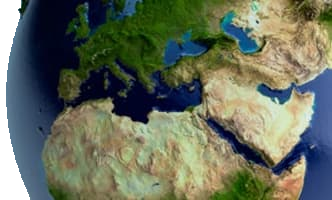
On 17 December 2025, the MEPIELAN Centre reported on the successful completion of the five-week UNEP/MAP – MEPIELAN Online Training School on Sustainable Marine Governance in the Mediterranean (13 October – 13 November 2025), a major international educational and capacity-building initiative.
Designed and developed by the MEPIELAN Centre in close cooperation with UNEP/MAP and organized in collaboration with the European Public Law Organization (EPLO), the Training School provided a unique, integrated platform for knowledge exchange, dialogue and capacity-building in the field of sustainable environmental governance.
The Training School was implemented within the framework of the Barcelona Convention system and addressed its evolving interlinkages with relevant international treaty regimes and policy processes, with particular focus on the distinct challenges and opportunities facing the Mediterranean region.
The initiative was grounded in, and contributed to the educational operationalization of, key strategic and normative instruments, including:
- the Mediterranean Strategy on Sustainable Development (MSSD);
- the UNEP/MAP Mid-Term Strategy 2022–2027;
- the Barcelona Convention system for the Protection of the Marine and Coastal Environment of the Mediterranean.
The Academic Director of the Training School, Professor Evangelos Raftopoulos, Director of the MEPIELAN Centre, prepared a comprehensive Report on the Training School, which is available here.
About the author
MEPIELAN Centre
MEPIELAN Centre is an international research, training and educational centre established by Professor Evangelos Raftopoulos at the Panteion University of Athens in 2008.
Before its establishment as a University Centre, MEPIELAN operated as a successful international research, training and informational programme (2002-2007) under the scientific direction of Professor Evangelos Raftopoulos and the aegis of the Panteion University of Athens, supported by the Mediterranean Action Plan/UNEP and the Greek Ministry of the Environment, Physical Planning and Public Works.
MEPIELAN Centre is an accredited UNEP/MAP PARTNER (since 2013), a Member of the Mediterranean Commission on Sustainable Development (MCSD) (since 2016), and a Member of the Steering Committee of the MCSD (since 2019).
On 22 May 2022, MEPIELAN Centre proceeded to the development of MEPIELAN as a Non- Profit Civil Organization (INGO) for the more effective and efficient advancement of its Goals and Missions and furtherance of its activities. MEPIELAN Centre as a Non- Profit Civil Organization (INGO) is registered in Greek Law (Hellenic Business Registry, Reg. No. 16477300100) in accordance with Laws 4072/2012 & 4919/2022 as applicable
- MEPIELAN Centre

- MEPIELAN Centre
- MEPIELAN Centre
- MEPIELAN Centre
- MEPIELAN Centre
- MEPIELAN Centre
- MEPIELAN Centre
- MEPIELAN Centre
- MEPIELAN Centre
- MEPIELAN Centre
- MEPIELAN Centre
- MEPIELAN Centre
- MEPIELAN Centre
- MEPIELAN Centre
- MEPIELAN Centre
- MEPIELAN Centre
- MEPIELAN Centre
- MEPIELAN Centre
- MEPIELAN Centre
- MEPIELAN Centre
- MEPIELAN Centre
- MEPIELAN Centre
- MEPIELAN Centre
- MEPIELAN Centre
- MEPIELAN Centre
- MEPIELAN Centre
- MEPIELAN Centre
- MEPIELAN Centre
- MEPIELAN Centre
- MEPIELAN Centre
- MEPIELAN Centre
- MEPIELAN Centre
- MEPIELAN Centre
- MEPIELAN Centre
- MEPIELAN Centre
- MEPIELAN Centre
- MEPIELAN Centre
- MEPIELAN Centre
- MEPIELAN Centre
- MEPIELAN Centre
- MEPIELAN Centre
- MEPIELAN Centre
- MEPIELAN Centre
- MEPIELAN Centre
- MEPIELAN Centre
- MEPIELAN Centre
- MEPIELAN Centre
- MEPIELAN Centre
- MEPIELAN Centre
- MEPIELAN Centre
- MEPIELAN Centre
- MEPIELAN Centre
- MEPIELAN Centre
- MEPIELAN Centre
- MEPIELAN Centre
- MEPIELAN Centre
- MEPIELAN Centre
- MEPIELAN Centre
- MEPIELAN Centre
- MEPIELAN Centre
- MEPIELAN Centre
- MEPIELAN Centre
- MEPIELAN Centre
- MEPIELAN Centre
- MEPIELAN Centre
- MEPIELAN Centre
- MEPIELAN Centre
- MEPIELAN Centre
- MEPIELAN Centre
- MEPIELAN Centre
- MEPIELAN Centre
- MEPIELAN Centre
- MEPIELAN Centre
- MEPIELAN Centre
- MEPIELAN Centre
- MEPIELAN Centre
- MEPIELAN Centre
- MEPIELAN Centre
- MEPIELAN Centre
- MEPIELAN Centre
- MEPIELAN Centre
- MEPIELAN Centre
- MEPIELAN Centre
- MEPIELAN Centre
- MEPIELAN Centre
- MEPIELAN Centre
- MEPIELAN Centre
- MEPIELAN Centre
- MEPIELAN Centre
- MEPIELAN Centre
- MEPIELAN Centre
- MEPIELAN Centre
- MEPIELAN Centre
- MEPIELAN Centre
- MEPIELAN Centre
- MEPIELAN Centre
- MEPIELAN Centre
- MEPIELAN Centre
- MEPIELAN Centre
- MEPIELAN Centre
- MEPIELAN Centre
- MEPIELAN Centre
- MEPIELAN Centre
- MEPIELAN Centre
- MEPIELAN Centre
- MEPIELAN Centre
- MEPIELAN Centre
- MEPIELAN Centre
- MEPIELAN Centre
- MEPIELAN Centre
- MEPIELAN Centre
- MEPIELAN Centre
- MEPIELAN Centre
- MEPIELAN Centre
- MEPIELAN Centre
- MEPIELAN Centre
- MEPIELAN Centre
- MEPIELAN Centre
- MEPIELAN Centre
- MEPIELAN Centre
- MEPIELAN Centre
- MEPIELAN Centre
- MEPIELAN Centre
- MEPIELAN Centre
- MEPIELAN Centre
- MEPIELAN Centre
- MEPIELAN Centre
- MEPIELAN Centre
- MEPIELAN Centre
- MEPIELAN Centre
- MEPIELAN Centre
- MEPIELAN Centre
- MEPIELAN Centre
- MEPIELAN Centre
- MEPIELAN Centre
- MEPIELAN Centre
- MEPIELAN Centre
- MEPIELAN Centre
- MEPIELAN Centre
- MEPIELAN Centre
- MEPIELAN Centre
- MEPIELAN Centre
- MEPIELAN Centre
- MEPIELAN Centre
- MEPIELAN Centre
- MEPIELAN Centre
- MEPIELAN Centre
- MEPIELAN Centre
- MEPIELAN Centre
- MEPIELAN Centre
- MEPIELAN Centre
- MEPIELAN Centre
- MEPIELAN Centre
- MEPIELAN Centre
- MEPIELAN Centre
- MEPIELAN Centre
- MEPIELAN Centre
- MEPIELAN Centre
- MEPIELAN Centre
- MEPIELAN Centre
- MEPIELAN Centre
- MEPIELAN Centre
- MEPIELAN Centre
- MEPIELAN Centre
- MEPIELAN Centre