
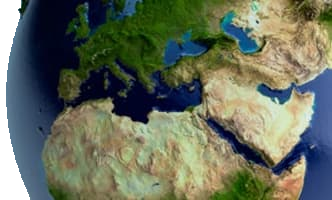
The 17th Ordinary Meeting of the Contracting Parties (COP 17) to the Barcelona Convention for the Protection of the Marine Environment and the Coastal Region of the Mediterranean and its Protocols was held from 8 to 10 February 2012 in Paris, France. Delegates from 21 Mediterranean countries and the European Union attended the Meeting.
The Meeting welcomed the substantial progress made in 2011 in achieving the entry into force of the Integrated Coastal Zone Management (ICZM) Protocol and the Protocol for the Protection of the Mediterranean Sea against Pollution resulting from Exploration and Exploitation of the Continental Shelf and the Seabed and its Subsoil (the Offshore Protocol).* Furthermore, consultations covered a wide range of issues which led to the adoption of 14 Decisions on strategic issues, including the Decisions regarding the Implementation of the MAP Ecosystem Approach Roadmap, the Action Plan for the Implementation of the ICZM Protocol for the Mediterranean (2012-2019), and the Amendments of the Annexes II and III to the 1995 Protocol Concerning Specially Protected Areas and Biological Diversity in the Mediterranean. Finally, of particular importance were the Decisions related with the adoption of the MAP Programme of Work and Budget for the 2012-2013 Biennium and Governance.
The COP 17 concluded with the adoption of the Paris Declaration, which calls the Contracting Parties to the Barcelona Convention for a strategic policy framework for “blue” economy, a version of the Green Economy applying to seas and oceans, to be adopted at the UN Conference on Sustainable Development (UNCSD, or Rio+20) in June 2012.
In the Paris Declaration, the Contracting Parties also:
• Reaffirmed their political commitment to the sustainable development of the Mediterranean Sea and its coastal zones through an ecosystem approach to the management of human activities.
• Agreed to develop a coherent, well-managed network of marine protected areas in the Mediterranean, aiming for a target of 10% of marine protected areas by 2020.
• Decided to intensify their efforts to curb marine pollution from land-based sources, such as mercury, Persistent Organic Pollutants and marine litter, by adopting legally binding measures, and reduce pollution from offshore and marine-based activities though regional action plans.
• Adopted the action plan for the implementation of the Integrated Coastal Zone Management Protocol, and encouraged all Contracting Parties to ratify it.
• Agreed to work toward protecting the conservation and sustainable use of marine biodiversity in areas beyond national jurisdiction through the implementation of existing instruments and through the development of a multilateral agreement under the United Nations Convention on the Law of the Sea.
• Supported the preparation by 2014 of a report on the state of the marine environment, including from a socioeconomic perspective.
As Mr. Achim Steiner, Executive Director of UNEP and Under Secretary General of the UN, underlined: “The time has come for us to rethink how we manage our oceans. They are a key pillar for many countries of their economic and social development, and are vital in the fight against poverty. But too many of these essential natural resources are being degraded by unsustainable use, putting the ecosystems services they provide, such as food security and climate regulations for instance, at risk”.
*See MEPIELAN E-Bulletin, Two Protocols to the Barcelona Convention System Enter Into Force: The “New and Innovative” ICZM Protocol and the “Dormant” Offshore Protocol, News, Thursday, 25 November 2010, available at https://ebulletin.mepielan.gr/news/thematic-news/environmental-governance-regimes/2010/mediterranean-sea-two-protocols-to-the-barcelona-convention-system-enter-into-force-the-new-and-innovative-iczm-protocol-and-the-dormant-offshore-protocol/
Source: UNEP News Center, IISD Reporting Services
For further information:
http://www.unep.org/newscentre/Default.aspx?DocumentID=2667&ArticleID=9025&l=en
http://climate-l.iisd.org/news/barcelona-convention-parties-call-for-a-blue-economy-to-safeguard-the-mediterranean/
About the author

MEPIELAN Centre
MEPIELAN Centre is an international research, training and educational centre established by Professor Evangelos Raftopoulos at the Panteion University of Athens in 2008.
Before its establishment as a University Centre, MEPIELAN operated as a successful international research, training and informational programme (2002-2007) under the scientific direction of Professor Evangelos Raftopoulos and the aegis of the Panteion University of Athens, supported by the Mediterranean Action Plan/UNEP and the Greek Ministry of the Environment, Physical Planning and Public Works.
MEPIELAN Centre is an accredited UNEP/MAP PARTNER (since 2013), a Member of the Mediterranean Commission on Sustainable Development (MCSD) (since 2016), and a Member of the Steering Committee of the MCSD (since 2019).
On 22 May 2022, MEPIELAN Centre proceeded to the development of MEPIELAN as a Non- Profit Civil Organization (INGO) for the more effective and efficient advancement of its Goals and Missions and furtherance of its activities. MEPIELAN Centre as a Non- Profit Civil Organization (INGO) is registered in Greek Law (Hellenic Business Registry, Reg. No. 16477300100) in accordance with Laws 4072/2012 & 4919/2022 as applicable
- MEPIELAN Centre

- MEPIELAN Centre
- MEPIELAN Centre
- MEPIELAN Centre
- MEPIELAN Centre
- MEPIELAN Centre
- MEPIELAN Centre
- MEPIELAN Centre
- MEPIELAN Centre
- MEPIELAN Centre
- MEPIELAN Centre
- MEPIELAN Centre
- MEPIELAN Centre
- MEPIELAN Centre
- MEPIELAN Centre
- MEPIELAN Centre
- MEPIELAN Centre
- MEPIELAN Centre
- MEPIELAN Centre
- MEPIELAN Centre
- MEPIELAN Centre
- MEPIELAN Centre
- MEPIELAN Centre
- MEPIELAN Centre
- MEPIELAN Centre
- MEPIELAN Centre
- MEPIELAN Centre
- MEPIELAN Centre
- MEPIELAN Centre
- MEPIELAN Centre
- MEPIELAN Centre
- MEPIELAN Centre
- MEPIELAN Centre
- MEPIELAN Centre
- MEPIELAN Centre
- MEPIELAN Centre
- MEPIELAN Centre
- MEPIELAN Centre
- MEPIELAN Centre
- MEPIELAN Centre
- MEPIELAN Centre
- MEPIELAN Centre
- MEPIELAN Centre
- MEPIELAN Centre
- MEPIELAN Centre
- MEPIELAN Centre
- MEPIELAN Centre
- MEPIELAN Centre
- MEPIELAN Centre
- MEPIELAN Centre
- MEPIELAN Centre
- MEPIELAN Centre
- MEPIELAN Centre
- MEPIELAN Centre
- MEPIELAN Centre
- MEPIELAN Centre
- MEPIELAN Centre
- MEPIELAN Centre
- MEPIELAN Centre
- MEPIELAN Centre
- MEPIELAN Centre
- MEPIELAN Centre
- MEPIELAN Centre
- MEPIELAN Centre
- MEPIELAN Centre
- MEPIELAN Centre
- MEPIELAN Centre
- MEPIELAN Centre
- MEPIELAN Centre
- MEPIELAN Centre
- MEPIELAN Centre
- MEPIELAN Centre
- MEPIELAN Centre
- MEPIELAN Centre
- MEPIELAN Centre
- MEPIELAN Centre
- MEPIELAN Centre
- MEPIELAN Centre
- MEPIELAN Centre
- MEPIELAN Centre
- MEPIELAN Centre
- MEPIELAN Centre
- MEPIELAN Centre
- MEPIELAN Centre
- MEPIELAN Centre
- MEPIELAN Centre
- MEPIELAN Centre
- MEPIELAN Centre
- MEPIELAN Centre
- MEPIELAN Centre
- MEPIELAN Centre
- MEPIELAN Centre
- MEPIELAN Centre
- MEPIELAN Centre
- MEPIELAN Centre
- MEPIELAN Centre
- MEPIELAN Centre
- MEPIELAN Centre
- MEPIELAN Centre
- MEPIELAN Centre
- MEPIELAN Centre
- MEPIELAN Centre
- MEPIELAN Centre
- MEPIELAN Centre
- MEPIELAN Centre
- MEPIELAN Centre
- MEPIELAN Centre
- MEPIELAN Centre
- MEPIELAN Centre
- MEPIELAN Centre
- MEPIELAN Centre
- MEPIELAN Centre
- MEPIELAN Centre
- MEPIELAN Centre
- MEPIELAN Centre
- MEPIELAN Centre
- MEPIELAN Centre
- MEPIELAN Centre
- MEPIELAN Centre
- MEPIELAN Centre
- MEPIELAN Centre
- MEPIELAN Centre
- MEPIELAN Centre
- MEPIELAN Centre
- MEPIELAN Centre
- MEPIELAN Centre
- MEPIELAN Centre
- MEPIELAN Centre
- MEPIELAN Centre
- MEPIELAN Centre
- MEPIELAN Centre
- MEPIELAN Centre
- MEPIELAN Centre
- MEPIELAN Centre
- MEPIELAN Centre
- MEPIELAN Centre
- MEPIELAN Centre
- MEPIELAN Centre
- MEPIELAN Centre
- MEPIELAN Centre
- MEPIELAN Centre
- MEPIELAN Centre
- MEPIELAN Centre
- MEPIELAN Centre
- MEPIELAN Centre
- MEPIELAN Centre
- MEPIELAN Centre
- MEPIELAN Centre
- MEPIELAN Centre
- MEPIELAN Centre
- MEPIELAN Centre
- MEPIELAN Centre
- MEPIELAN Centre
- MEPIELAN Centre
- MEPIELAN Centre
- MEPIELAN Centre
- MEPIELAN Centre
- MEPIELAN Centre
- MEPIELAN Centre
- MEPIELAN Centre
- MEPIELAN Centre
- MEPIELAN Centre
- MEPIELAN Centre
- MEPIELAN Centre
- MEPIELAN Centre