Background of EU Emissions Trading System – Roles and Benefits
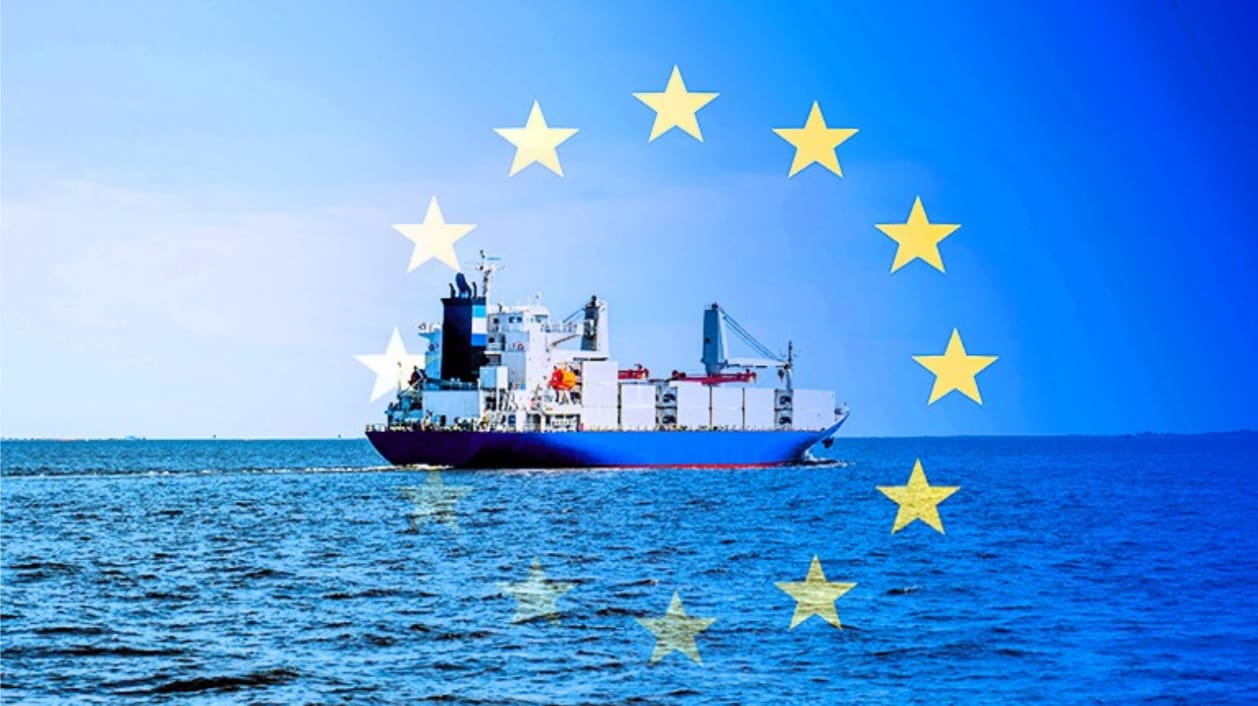
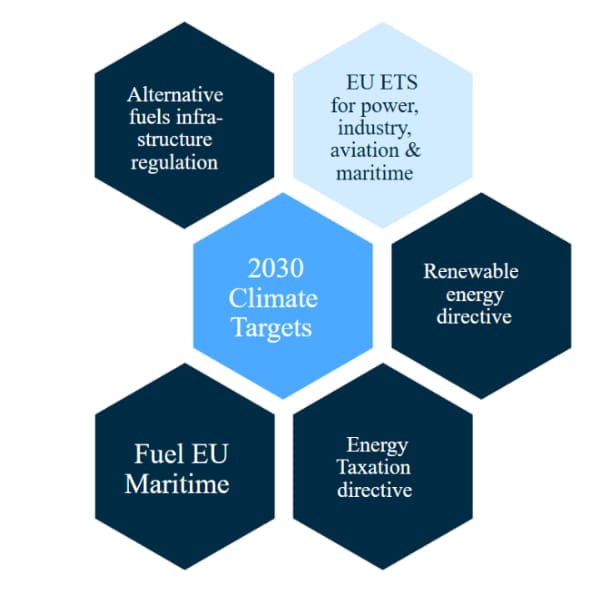
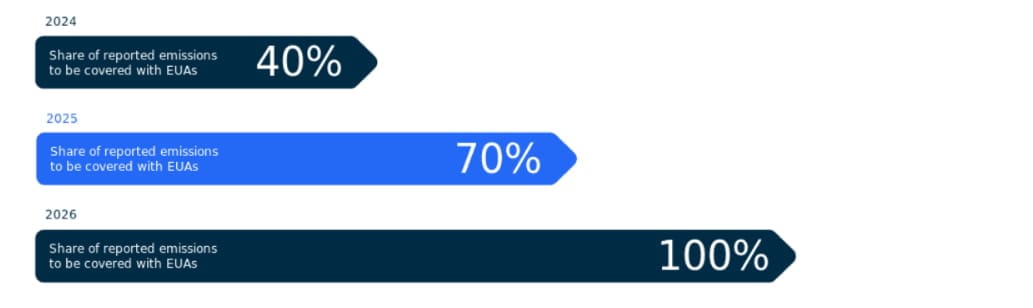
The EU Emissions Trading System (EU ETS) constitutes a core instrument of the European climate policy. Established in 2005, the system has undergone several revisions, gradually expanding its coverage to include various greenhouse gases (GHGs) and sectors of the economy. The extension of the EU ETS to maritime transport in 2023 marks a pivotal step in Europe’s climate policy trajectory. This “cap-and-trade” mechanism1, driven by the broader Fit for 55 EU package2, has been mandatory for energy, industry, aviation and (since 2024) maritime sectors, aiming for a 55% net reduction in greenhouse gases (GHGs) by 2030 and integrating maritime emissions into the EU’s overarching goal of reducing GHGs. The scope of the EU ETS, which was first implemented in 2024 with 40% coverage obligation and continued in 2025 at 70% level, will increase to 100% of reported emissions in 2026 with the transition to its third phase. The 50% reduction applied to emissions occurred on voyages involving non-EU ports, which also affects the Mediterranean routes, will continue to apply under the same conditions. In addition, the FuelEU Maritime Regulation3, which came into force in 2025 with a target of reducing the greenhouse gas intensity of fuels by 2% initially and achieving an 80% reduction by 2050, will be implemented throughout 2026, promoting renewable low-carbon fuels and clean energy technologies for ships.
As of early 2026, many shipping organizations have moved from merely learning the rules to actively operating EU ETS Maritime and FuelEU at scale. This marks the year where process discipline, data quality, and cross-functional coordination will materially affect costs, disputes, and credibility. Two key dynamics define the year: the phase-in of EU ETS Maritime, which increases allowance exposure and sharpens surrender deadlines, and the already enforced FuelEU Maritime, supported by implementation guidance from the European Sustainable Shipping Forum (ESSF). Meanwhile, global uncertainty remains as the IMO has adjourned negotiations on its Net Zero Framework until 2026, delaying clarity on long-term fuel and retrofit decisions. Shipping companies that view ETS and FuelEU as operational systems rather than just reporting mechanisms realize significant advantages through enhanced emissions forecasting and allowance procurement, reduced charterparty disputes, as well as clearer audit trails.
Strengthening and gradually expanding the EU ETS is essential to achieving the EU’s long‑term climate goals. A reliable, predictable and effective EU ETS directs investment, raises funds for the green transition, and supports innovation and competitiveness across Europe’s industry, being the primary driver of the EU’s 2030 and 2040 emission reductions. According to the recently published European Environmental Agency’s report,4 Member States projections indicate that cuts in ETS‑covered sectors are the main contributors to meeting the 2030 target, while reductions under the Effort Sharing Regulation (ESR)5 and removals under the LULUCF Regulation6 are likely to fall short under current policies. Carbon pricing steers investment toward low‑carbon technologies. A robust ETS supports climate objectives and strengthens the resilience of Europe’s energy system.7 By encouraging energy efficiency, electrification and renewables, the ETS reduces dependence on imported fossil fuels and mitigates exposure to supply shocks and price volatility.
At the same time, the EU ETS is the largest carbon market by trading volume and serves as a model for other systems. It is linked with Switzerland, Norway, Iceland and Liechtenstein, as well as with the UK as of July 2026. Furthermore, EU ETS also contributes to the EU’s Nationally Determined Contribution under the Paris Agreement, therefore, a strong ETS strengthens international confidence in carbon pricing.
One of the most promising aspects of the ETS expansion lies in revenue generation. Allowance auctions will yield significant public. If strategically deployed, these revenues can fund infrastructure projects, foster the adoption of low-carbon fuels, and support social mitigation measures. The European Commission’s guidelines for the Social Climate Fund,8 complemented by the national Social Climate Plans, provide a critical framework for addressing energy and transport poverty across the Mediterranean.
Background of the CLIMA+ Project
The project “Technical support for the development of a Social Climate Plan and the implementation of the EU Emission Trading Systems as well as the Carbon Border Adjustment Mechanism in Greece” (CLIMA+)9 aims at establishing the required framework conditions for the development of a Social Climate Plan and for the implementation of the EU ETS for maritime transport, buildings, road transport and additional sectors as well as the Carbon Border Adjustment Mechanism in Greece. It is implemented by Deutsche Gesellschaft für Internationale Zusammenarbeit (GIZ), in cooperation with the Hellenic Ministry for Environment and Energy (YPEN) as well as the Independent Authority for Public Revenue (IAPR). The CLIMA+ project emerges at a critical juncture in Europe’s climate governance, specifically tailored to support Greece’s transition towards a low-carbon maritime sector within the broader framework of EU climate policies. Launched in May 2024 and scheduled to run until June 2026, CLIMA+ is a targeted technical assistance initiative funded by the European Commission through the Technical Support Instrument (TSI) and supported by the German Federal Ministry for the Environment, Climate Action, Nature Conservation and Nuclear Safety (BMUKN).
The expansion of EU ETS to include shipping, a sector accounting for a significant share of European emissions, is a landmark policy shift designed to place an economic cost on carbon emissions from ships operating within the EU, particularly within the Mediterranean basin, a region characterized by its dense maritime traffic, economic dependence on shipping, pollution from ships danger to the Mediterranean marine environment and heightened climate vulnerabilities. For Greece, a country with a vast maritime industry and strategic port hubs, this shift presents both opportunities and challenges: while it opens avenues for raising revenue that can support sustainable infrastructure, it also necessitates robust institutional capacity, clear regulatory guidance and social safeguards to mitigate adverse impacts. Therefore, the CLIMA+ project is aiming to translate the ambitious signals of the EU’s climate policy into tangible infrastructure, capacity and social measures, thereby transforming a market-based instrument into an effective driver of the blue transition.
The core challenge lies in translating EU’s ambitious climate targets into practical measures that facilitate compliance while ensuring social equity. Greece, as a nation heavily reliant on maritime activities and facing high levels of energy and transport poverty, must develop effective MRV (monitoring, reporting, verification) systems and establish transparent allowance allocation processes. CLIMA+ responds directly to these needs by providing expertise and capacity-building to develop a tailored MRV framework, operationalize allowance management and establish mechanisms for revenue reinvestment. Furthermore, CLIMA+ aims to enhance institutional coordination among ministries and emphasize stakeholder engagement. Last, but not least, an essential aspect of the project is its focus on capacity development, by organizing expertise training for public officials, verifiers and industry operators, so that they can meet compliance standards confidently, while maintaining market integrity.
The Mediterranean Shipping Context: A Nexus of Economic and Climate Vulnerabilities
The Mediterranean region embodies a focal point of Europe’s maritime activity, serving as both a critical trade corridor and a hub of transshipment, passenger ferries and regional short-sea shipping. With approximately 40% of the EU’s maritime goods transported via the Mediterranean, the region sustains a complex network of shipping lines, ports and coastal communities. It is also among the most climate-vulnerable areas of Europe, not to mention the grave exposure to marine pollution (see the Prevention and Emergency Protocol (2002) to the Protocol Barcelona Convention10). Rising sea levels threaten port infrastructure, extreme weather events disrupt shipping routes and shifts in fisheries and tourism, both substantial economic sectors, are already being felt. The dense shipping corridors are a significant contributor to regional air and marine pollution, compounded by the sector’s growing GHG emissions (around 14.2% of transport-sector emissions within the EU, and an increase of 8.5% in CO₂ emissions from maritime transport in 2022 alone).11
Historically, Mediterranean shipping has operated with limited climate regulation. Its strategic importance and competitiveness have often led to regulatory gaps and resistance to stringent measures. The recent integration of shipping into the EU ETS requiring ships over 5,000 gross tons calling at EU ports to purchase allowances, signifies a normative shift aligned with Europe’s climate ambitions. Yet the complex geographical, economic, social and administrative realities of the region pose challenges to ensure that the ETS’s environmental signals are translated into effective, fair and sustainable decarbonization pathways.
The incorporation of maritime transport into the EU ETS is a landmark development for climate policy. It creates an emissions price that mobilizes economic incentives for shipowners, operators and ports to support zero-carbon fuels and efficient operational practices. The system’s core policy logic is straightforward: by assigning a cost to emissions, it makes carbon-intensive fuels less attractive relative to cleaner alternatives. Over time, this should accelerate technological innovation, infrastructure deployment, such as LNG, hydrogen, ammonia bunkering and fleet renewals. However, the efficacy of ETS-1 hinges on rigorous system design. A transparent, predictable and interoperable Monitoring, Reporting & Verification (MRV) framework is essential to establish market integrity.
Shipping companies have been subject to obligations under the MRV Regulation12 since 2018 and, as they are covered by the EU ETS, are required to have an approved Monitoring Plan for monitoring and reporting annual emissions. Every year, companies must submit an Annual Emissions Report (AER) for each of the vessels under their responsibility, as well as an emissions report at the company level (aggregating the ship data to be reported for ETS purposes), known as Company Emissions Report (CER). The data for a given year must be verified by shipping companies covered by the EU ETS. Shipping companies are also required to have an approved monitoring plan for monitoring and reporting annual emissions. The data for a given year must be verified by an accredited verifier by 31 March of the following year. Once verified, companies must “surrender” (use) the equivalent number of allowances by 30 September of that year. All vessels’ data as well as supporting documents are reported and uploaded through THETIS-MRV, a platform operated by the European Maritime Safety Agency (EMSA), which enables, among other benefits, the publication of reliable data on ships’ emissions.
Operational and governance challenges in implementing the EU ETS in the Mediterranean maritime sector
Effective implementation of the EU ETS within the maritime sector, particularly in the Mediterranean context, requires a comprehensive approach that addresses technical, institutional, legal and regional challenges. The success of ETS-1 deployment hinges on the creation of a robust MRV system capable of capturing the complexities of Mediterranean shipping routes, diverse vessel types, and ownership structures. The example of Greece, as a major maritime nation and port hub, exemplifies the need for tailored capacity-building efforts to establish interoperable registries, accurate voyage reporting, and transparent allowance accounting. Such systems will underpin market integrity, prevent fraud, and ensure that allowance prices reflect genuine emission reductions.
CLIMA+ has responded directly to these needs through its focused technical assistance. By developing a tailored MRV roadmap, deploying pilot digital registries and training relevant authorities and stakeholders, the project aims to embed reliable monitoring practices that reinforce compliance and market confidence. These efforts are critical to prevent loopholes and leakage, which could otherwise undermine the environmental integrity of the ETS mechanism and diminish potential revenues earmarked for climate investment.
The strategic deployment of auction revenues from maritime allowances presents a pivotal opportunity to finance infrastructure upgrades and foster low-carbon fuel markets across Mediterranean ports. Port authorities may leverage these funds to establish onshore power systems and develop alternative fuel bunkering infrastructure, particularly for clean fuels and sustainable port equipment. Such investments are essential to reduce port-related emissions and maintain port competitiveness as global standards evolve. Importantly, supporting the adoption of alternative fuels not only reduces maritime emissions but also catalyzes local value chains and job creation, aligning climate policies with socioeconomic development.
However, deploying revenues effectively necessitates cautious design to ensure social fairness and economic resilience. High levels of energy and transport poverty in the Mediterranean region demand that part of the ETS proceeds are allocated to social mitigation measures (subsidies, retraining, and community support programs) that shield vulnerable populations from potential cost increases resulting from the ETS implementation. The option of establishing a dedicated “Blue Transition Fund” could serve as a mechanism to prioritize investments that deliver both emission reductions and social benefits. Particularly in Greece, the “Blue Fund” was established under Article 3 (paragraph 3) of Law 2242/94 to collect fines and fees related to marine environmental regulations. The revenues from this fund are allocated exclusively to prevent and combat marine pollution. Following Law 3889/2010, the Special Fund for Regulatory and Urban Planning was renamed the “Green Fund” which consolidates resources including those from the “Blue Fund” to create a comprehensive financing mechanism for environmental initiatives. This integration enables Greece to effectively direct financial resources toward both enhancing maritime infrastructure and environmental protection, ensuring that revenue is strategically utilized to support the transition to a low-carbon maritime economy.
A key challenge facing Mediterranean ETS implementation is the risk of carbon leakage and cargo diversion to non-EU ports, which could weaken environmental outcomes and compromise economic interests. Thus, the governance must be structured with transitional measures, such as port-specific surcharges, incentives for early adopters, and regional cooperation that mitigate competitiveness concerns while preventing long-term exemptions that undermine the system’s integrity. Diplomatic and regional coordination are crucial here: strengthening cooperation with neighboring countries and regional treaty environmental regimes such as UNEP‑MAP Barcelona Convention system could facilitate the development of shared low‑carbon corridors and harmonized standards, reducing fragmentation and leakage risks. The regional scale of these efforts makes the role of the EU pivotal in providing technical support, policy coherence, and funding mechanisms. The EU instruments, such as the Modernization Fund, Innovation Fund, and the European Investment Bank’s lending programs, are vital to scaling pilot projects into full-fledged infrastructure and fleet conversion efforts. CLIMA+ exemplifies how targeted technical assistance and capacity building at national and port levels can align local actions with EU-wide ambitions.
In conclusion, the effectiveness of the EU ETS in Mediterranean shipping hinges on deliberate, coordinated action at multiple levels. It involves not only setting a price for carbon but also designing and implementing a system that ensures compliance, invests revenues strategically, fosters innovation and protects vulnerable communities. The CLIMA+ project has exemplified how technical support, stakeholder engagement and revenue allocation can transform the ETS1 from a mere market signal into a tangible driver of a just, low-carbon blue economy. Greece, supported by regional cooperation and EU instruments, could demonstrate a best practice, turning the ambitious promise of the EU’s climate policy into a practical and sustainable maritime transition for the entire Mediterranean basin. This approach would set a valuable precedent for other Mediterranean nations and regions worldwide, illustrating that effective climate action in complex maritime economies necessitates a blend of market mechanisms, strong environmental governance, social foresight and regional solidarity.
ENDNOTES
1 Cap-and-trade” is a regulatory system aimed at reducing emissions by capping allowed levels and enabling companies to trade unused credits. This mechanism encourages investment in clean technology and reduces pollution, aligning with environmental goals without imposing excessive burdens on industries. A cap-and-trade mechanism is a market-based policy, designed to reduce pollution by setting a legally binding limit (“cap”) on total emissions for an industry. Every government issues a limited number of permits (“allowances”), allowing companies to buy, sell, or trade them based on their emissions.
3 Regulation (EU) 2023/1805 of the European Parliament and of the Council of 13 September 2023 on the use of renewable and low-carbon fuels in maritime transport, and amending Directive 2009/16/EC.
4 “Trends and projections in Europe 2025” report explores the historical trends, most recent progress and projected future developments in climate change mitigation through reduced greenhouse gas emissions, renewable energy gains and improved energy efficiency. It builds upon data reported by all 27 European Union (EU) Member States, five European Environment Agency (EEA) member countries and nine Energy Community contracting parties. A technical background document accompanies this report, providing further detail on the data sources and targets referenced throughout (EN PDF: TH-01-25-028-EN-N – ISBN: 978-92-9480-734-2 – ISSN: 1977-8449 – doi: 10.2800/6474400).
5 The Effort Sharing Regulation (ESR) establishes binding annual greenhouse gas emission targets for Member States from 2021 to 2030. These national targets concern emissions from the following sectors: domestic transport (excluding aviation), buildings, agriculture, small industry, and waste. These sectors account for almost 60% of emissions in the EU. More information is available here: https://climate.ec.europa.eu/eu-action/effort-sharing-member-states-emission-targets/about-effort-sharing_en
6 Regulation (EU) 2018/841 (LULUCF Regulation) sets the accounting rules for the Land Use, Land-Use Change and Forestry (LULUCF) sector in the EU for 2021-2030, as it is part of the EU’s commitment to reduce overall emissions by at least 40% by 2030 under the Climate and Energy framework.
7 EEA Report 16/2024 “Renewables, electrification and flexibility – For a competitive EU energy system transformation by 2030” (EN PDF: TH-01-25-022-EN-N – ISBN: 978-92-9480-728-1 – ISSN: 1977-8449 – doi: 10.2800/4558900).
8 https://employment-social-affairs.ec.europa.eu/policies-and-activities/funding/social-climate-fund_en
9 Further information is available here: https://www.giz.de/en/projects/technical-support-development-social-climate-plan-and-implementation-eu-emission-trading
10 The Protocol Concerning Cooperation in Preventing Pollution from Ships and, in Cases of Emergency, Combating Pollution of the Mediterranean Sea, adopted in 2002 and entered into force in 2004.(the Prevention and Emergency Protocol) provides a regional framework for international cooperation and mutual assistance in preparing for and responding to oil and hazardous noxious substances (HNS) pollution incidents, and it applies to ships, platforms and ports.
11 European Maritime Transport Environmental Report 2025, available here: https://www.eea.europa.eu/en/analysis/publications/maritime-transport-2025
12 Regulation (EU) 2015/757 of the European Parliament and of the Council of 29 April 2015 on the monitoring, reporting and verification of greenhouse gas emissions from maritime transport, and amending Directive 2009/16/EC.
About the author

Georgios Raftopoulos
GIZ Expert & VP at MEPIELAN Centre, (LL.M. in International Law, U.C.L.), Energy Expert, Research Fellow of MEPIELAN Centre
- Georgios Raftopoulos

- Georgios Raftopoulos